Protoflow blog
When the Bonus Makes the Claim
The bottle names no hormone. The free download that arrives with it names one in its title.
Start here
Two documents, one parcel
Open a three-bottle order in this category and two kinds of writing arrive in the same parcel. One is a supplement label: its wording is regulated, its permitted sentences are defined, and a notification about it goes to a federal agency. The other is a free ebook, whose title was written by whoever wanted it to be clicked.
Nothing about that arrangement is unlawful or rare. But it creates a gap worth understanding precisely, because the strongest claim in a parcel is very often made by the part of it that nobody had to stand behind. Protoflow is the worked example, and an unusually clean one.
Structure/function
What a label is allowed to say
Start with what a dietary supplement may say about itself, because the permitted category is narrower than most people assume. The FDA describes it this way: A structure/function claim may “describe the role of a nutrient or dietary ingredient intended to affect the normal structure or function of the human body, for example, ‘calcium builds strong bones.’”
Read the example, not the rule
The agency’s own illustration is deliberately modest, and it is the most useful part of the definition. Calcium builds strong bones. That is the shape of the strongest sentence this category may print: a nutrient, a normal body function, a contribution rather than a cure.
What that shape does and does not certify
Supports, helps maintain, contributes to. These are not weasel words. They are the outline of the only kind of claim a supplement is permitted to make, and a bottle that stays inside them is a company that read the rule and followed it. What the correct shape does not certify is the evidence: a well-formed claim tells you the wording was drafted with care, not that the ingredient does anything.
Disease claims
What only an approved drug may say
On the other side of the line is the kind of claim that changes what a product legally is. A disease claim says a product can “diagnose, treat, cure or prevent any disease”, which only an approved drug may do.
Where the line actually falls
Not on how confident a sentence sounds, but on whether it promises to act on a disease. A product may say it supports a normal body function; it may not say it restores one that has failed, because promising to change a clinical outcome is promising to treat.
Naming is the tell
The quickest way to see which side of the line a sentence is on is to ask whether it names anything: a condition, a diagnosis, a measurement, a hormone. A permitted claim is vague by design; a forbidden one is specific. Specificity is also what sells, which is why the most specific language in this category so rarely appears in the regulated places and so reliably appears everywhere else.
The disclaimer
The sentence that must travel with it
A structure/function claim is not supposed to travel alone. A disclaimer goes with it to state what the claim does not mean: “FDA has not evaluated the claim” and the product “is not intended to diagnose, treat, cure or prevent any disease.” On this product it is printed on the wrap itself, boxed, in full: “† These statements have not been evaluated by the Food & Drug Administration. This product is not intended to diagnose, treat, cure or prevent any disease.”
Train your eye on the marker
The disclaimer is usually set in the smallest type on the package, beside an asterisk or a dagger tying it back to a claim on the front. This label uses a dagger and it resolves correctly: both front-panel claims carry one, and the disclaimer they point at is on the same artwork. That is how it is meant to be done, and it is worth saying so before anything critical follows. It is not an admission that a product is useless; it is the sentence that tells you which kind of document you are holding.
And what it does not reach
It reaches the claims on the container. It does not reach a title on a PDF that arrives in a download link three minutes after checkout. That is the gap this post is describing.
The rule
Nobody clears the wording first
Now the part that surprises almost everybody, and the reason a well-written label proves less than people assume. These claims “are not pre-approved by FDA, but the manufacturer must have substantiation that the claim is truthful and not misleading and must submit a notification with the text of the claim to FDA no later than 30 days after marketing the dietary supplement with the claim.”
Nobody clears the wording in advance
There is no desk at which a claim is submitted, reviewed and approved before printing. The manufacturer writes the words and the bottle ships. A phrase on a front panel has not passed anything, and a correct label describes its author’s care rather than an inspection.
The evidence lives in a filing cabinet
Substantiation is a genuine obligation, but the evidence sits in the company’s own files. Nothing requires it to be published and no public register exists.
The agency is told afterwards
The notification goes in no later than thirty days after marketing begins, so the product is on sale by the time the agency learns what the label says, and a notification is a filing rather than an endorsement. The ODS puts the position in one line: “The U.S. Food and Drug Administration (FDA) does not determine whether dietary supplements are effective before they are marketed.” It follows that with the corollary: “Supplement companies are responsible for having evidence that their products are safe, and the label claims are truthful and not misleading.”
Worked example
What this bottle says, and what ships beside it
Now look at this parcel, in two halves.
What the bottle claims
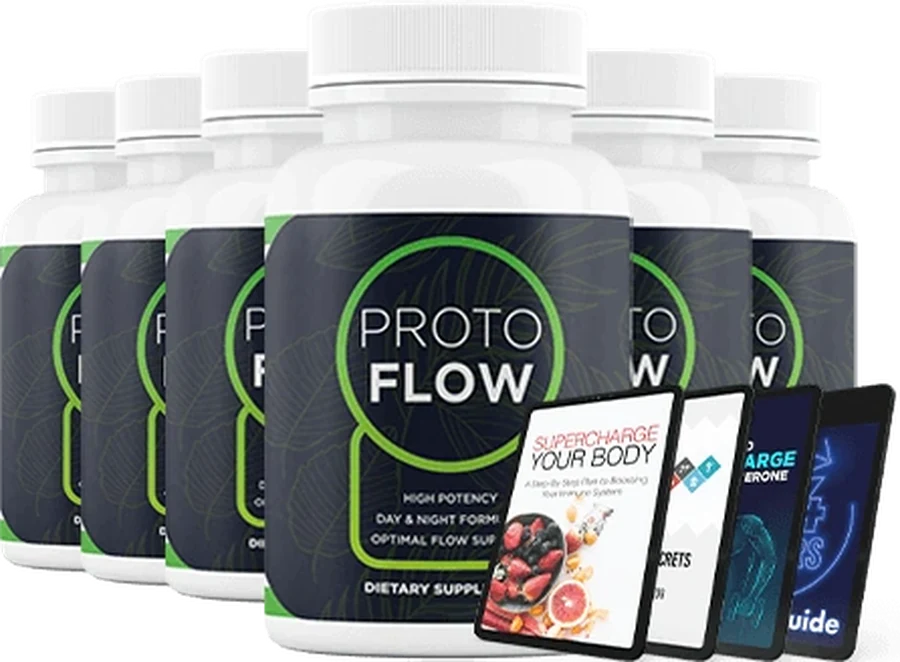
Two claims, both on the front, both with a dagger beside them: “OPTIMAL FLOW SUPPORT†” and “Day & night formula”. Both are structure/function claims of exactly the permitted shape. Neither names a condition, neither names a hormone, and neither promises an outcome. Read strictly as regulated wording, this is a careful job and it deserves to be called one.
What arrives beside it
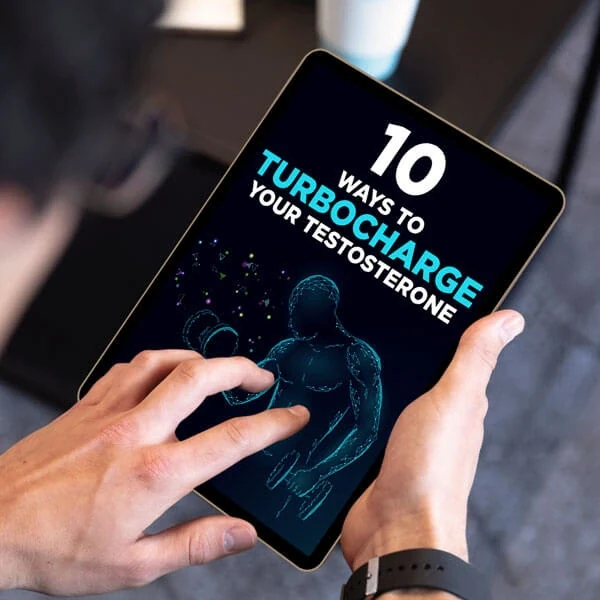
The three- and six-bottle packs arrive with four digital bonuses, and two of them say things the bottle does not. “10 Ways to Turbocharge Your Testosterone” names a hormone; the label’s claims are “optimal flow support” and “day & night formula”, and it names nothing. “Supercharge Your Body: A Step-By-Step Plan to Boosting Your Immune System” makes an immune claim the panel never makes. The other two are “Biohacking Secrets” and a “24 Hours Detox Guide”. A bonus is not a label, nobody has to substantiate its title, and a title is the part a buyer reads.
Set the two side by side
The label names nothing. The bundle names a hormone in one title and an immune system in another. Nothing about the bundle had to be notified to anybody and no disclaimer travels with a PDF. The reader who comes away believing the product is about testosterone did not get that from the bottle.
Four patterns
The other places unregulated words live
A claim in the title of a free bonus
The shape this post is about. The bundle names something the label may not, and nothing on the panel has to be wrong for it to work.
A promise in a headline above a compliant page
The page selling a product is an advertisement. Its heading is not part of the label, and nothing requires the two to agree.
A condition or a body part in the product name
A trade name needs no disclaimer and nothing resolves it.
A number in the marketing that is absent from the panel
If a figure appears in the copy but not in the Supplement Facts table, it has not been declared.
None of those four is unlawful or unusual. They are the places where persuasive language can live without meeting the standard that applies to the container. We name the shapes rather than the brands, because a list of competitors written by a seller is an advertisement with a table in it. And every one of the four moves in the same direction: there is no version of this where the unregulated layer claims less than the label, because nobody writes a free ebook to reduce expectations.
Closing
What to read, and what to discount
The habit is short. Read the panel, read the printed claims, find the disclaimer and check what it is tied to. Then read everything else in the parcel.
The rule
When a supplement arrives with reading material, check whether the reading material claims more than the bottle does. A correctly written label sitting inside a bundle whose titles name hormones and immune systems is a common shape, and the bundle is the part nobody has to stand behind.
The honest version
Credit where it is due: the regulated half of this parcel is well handled. The front claims are careful, both are disclaimed by a dagger that resolves on the same wrap, and the panel declares fourteen ingredients with fourteen published amounts and no proprietary blend. Buy it, if you buy it, for what the panel contains and for what the ingredients page works through row by row — not for the title of a free download.
References
Sources
- U.S. Food and Drug Administration. Structure/Function Claims. www.fda.gov. Accessed September 24, 2026.
- U.S. Food and Drug Administration. Dietary Supplements. www.fda.gov. Accessed September 24, 2026.
- Office of Dietary Supplements, National Institutes of Health. Dietary Supplements: What You Need to Know. ods.od.nih.gov. Accessed September 24, 2026.
- National Center for Complementary and Integrative Health, NIH. Using Dietary Supplements Wisely. www.nccih.nih.gov. Accessed September 24, 2026.
Order Protoflow from the official page
60 capsules a bottle, two capsules a day with water, so thirty days a bottle. Fourteen ingredients with fourteen published amounts and no proprietary blend, which is the reason every check on this site can be run at all. The capsule shell is gelatin. 60 days from purchase to change your mind. The order desk is +1 (302) 200-3480.
Price shown at checkout · 60-day window from the date of purchase · ships from inside the US · the label’s own support line is +1 (302) 200-3480
Next
Keep reading
Claimed, and evidenced
What the label claims, what the marketing claims, and what the federal reviews support.
Read it →Nine checks before you buy
A method for reading any multi-herb label without guessing at the gaps.
Read it →The seal and the ingredient line
Why the shell is the ingredient that decides a vegetarian question.
Read it →