Official product information
Protoflow Ingredients: All Fourteen, With Their Amounts
All fourteen ingredients read off the Supplement Facts panel in its printed order, each with its published amount and each checked against the federal page that covers it — and the six the marketing card leaves out.
Written and reviewed by the Protoflow Editorial Desk · Last updated September 24, 2026
Quick answer
The Protoflow panel declares fourteen ingredients with fourteen published amounts and no proprietary blend: vitamin E and niacin, then eleven botanicals and inosine, totalling 1,619 mg a serving. The marketing illustrates eight of the fourteen, and not one botanical row carries an extract ratio or a standardisation.
Turn the cards
Every Protoflow ingredient, in the panel’s printed order
Front: the row and its amount. Back: what a federal page says, quoted.
The Supplement Facts panel on the back of this bottle declares fourteen ingredients and prints an amount beside every one of them. There is no proprietary blend, no pooled total standing in for its parts, and nothing that has to be inferred. That single decision is what makes this page possible: every sentence below is checked against a figure the label chose to publish rather than one we had to estimate.
The fourteen cards below are in the panel’s printed order. Turn one over for what the federal page covering that row reports — or, in seven cases, for the plain statement that no federal consumer page covers it.
Card against label
Eight plates for fourteen rows
The eight it illustrates, and the six it does not.
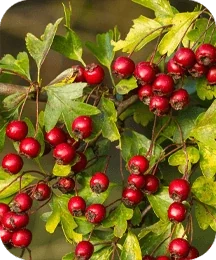
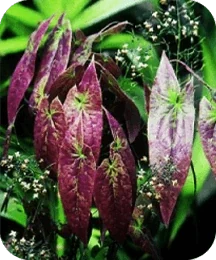
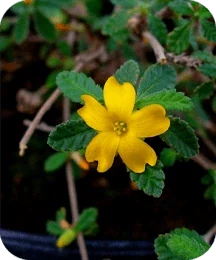
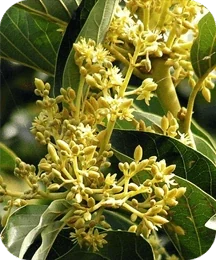
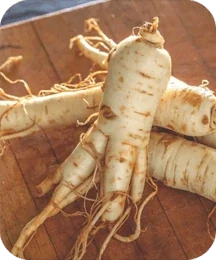
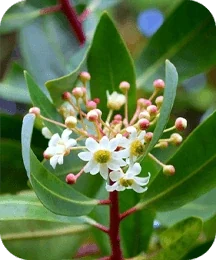
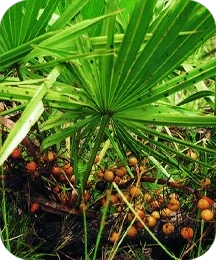
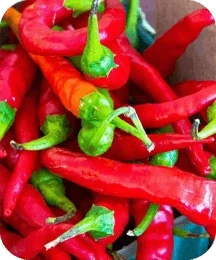
Eight of the fourteen rows arrive with an illustrated plate of their own, below in the panel’s order.
Scroll sideways — there are eight plates, and fourteen rows.
Six rows have no plate, and that is the point of this section
The listing card is headed “INSIDE PROTOFLOW — NAMED PLANT INGREDIENTS” and names eight: Chinese ginseng, cayenne pepper, damiana, saw palmetto, muira puama, epimedium sagittatum, hawthorn berries and catuaba. The panel declares fourteen. The six the card leaves out are ginkgo biloba at 120 mg, tribulus at 120 mg, inosine at 50 mg, oat straw at 32 mg, and both vitamins — including the niacin row that sits at more than twice its upper limit. Read the card’s own heading carefully and it is not quite a lie: it says named plant ingredients, and it does name eight of them. It just does not name the other three plants, or either vitamin.
Unillustrated, and therefore invisible in the marketing: ginkgo biloba at 120 mg, tribulus at 120 mg, inosine at 50 mg, oat straw at 32 mg, vitamin E at 13 mg and niacin at 75 mg. Two of those six are the only rows on the panel with a published Daily Value, and one sits at more than twice its own upper limit. We have drawn no plate for them, because none was supplied and inventing one would be the thing this page objects to.
Count the rows on the panel before you read the card. A marketing image is chosen; a Supplement Facts panel is required. When the two numbers differ, what is missing from the picture is usually more interesting than what is in it.
Drawn to scale
Three rows you can measure, and eleven you cannot
Added up, the fourteen rows come to 1,619 mg a serving, 1,531 mg of it in the twelve starred rows, with hawthorn and epimedium taking 500 of those milligrams between them and the whole bottom of the panel, from catuaba down to cayenne, sharing 271. Three of the fourteen rows can then be drawn against a real published figure, and only three: the rest have no Daily Value and no published studied dose, and we are not going to invent one to fill a bar. Below, the dashed bar is the reference and the solid bar is what a two-capsule serving contains.
Against the amount the research used
Most saw palmetto research uses around 320 mg a day of a standardised extract. This panel has 84.5 mg of unstandardised fruit, so the bar is about a quarter of the length — and the comparison flatters it, because the two are different preparations rather than different sizes of one thing.
Against a published reference intake, and a published ceiling
The vitamin E bar is the label at its best: 13 mg against a 15 mg RDA is 87 per cent, exactly what the %DV column prints. The niacin bar is drawn the other way round, because it is the only row here that exceeds its reference rather than approaching it — the dashed bar is the 35 mg ceiling and the solid bar runs well past it.
Weight, not activity
Eleven botanicals, and not one standardisation
Not one of the eleven botanical rows carries an extract ratio, a standardisation or a marker compound. That is the most important thing to understand about the figures above.
What a standardisation figure would tell you
A standardised extract states how much of a marker compound it contains, or how much raw plant went into it. With that figure, 250 mg means something repeatable and can be set beside the amount a study used. Without it, “Hawthorn (Fruit) 250 mg” could be milled dried fruit or a concentrate many times stronger — different products under one line of print. Every figure on this panel therefore describes weight rather than activity.
The credit, and we are not going to bury it
Fourteen ingredients, fourteen amounts, no proprietary blend. In a men’s botanical formula that is genuinely unusual — a blend is normally where this category hides how little of each herb is in the capsule. Here every figure is printed and every figure can be checked.
What we would ask, if there were anyone to ask
Two ordinary questions: are any of the eleven botanicals standardised to anything, and which form of niacin is in the capsule? Both are answerable in a sentence by whoever specified the formula. The difficulty is that the label prints no phone number, no email and no website at all, so there is no published route to anyone who would know.
Questions
Protoflow FAQ: ingredients questions
Is there a proprietary blend?
<strong>No, and that is the best thing about this label.</strong> All fourteen rows carry their own amount. In a men’s botanical formula a blend is almost standard, and it is exactly where a product hides how little of each herb is in the capsule. Protoflow does not use one.
How many of the ingredients have been reviewed by a federal body?
Four of the eleven botanicals have a page in NCCIH’s Herbs at a Glance series: hawthorn, ginkgo, Asian ginseng and saw palmetto. Seven do not — epimedium, damiana, muira puama, catuaba, tribulus, oat straw and cayenne. Both vitamins have ODS fact sheets.
What does standardised mean, and why does it matter here?
A standardised extract states how much of a marker compound it contains, so 250 mg of it means something repeatable. <strong>Not one of the eleven botanical rows on this panel carries a ratio or a standardisation.</strong> Every figure therefore describes weight rather than activity.
References
Sources for this page
- Office of Dietary Supplements, National Institutes of Health. Niacin: Fact Sheet for Consumers. ods.od.nih.gov. Accessed September 24, 2026.
- Office of Dietary Supplements, National Institutes of Health. Vitamin E: Fact Sheet for Consumers. ods.od.nih.gov. Accessed September 24, 2026.
- National Center for Complementary and Integrative Health, NIH. Saw Palmetto. www.nccih.nih.gov. Accessed September 24, 2026.
- National Center for Complementary and Integrative Health, NIH. Hawthorn. www.nccih.nih.gov. Accessed September 24, 2026.
- National Center for Complementary and Integrative Health, NIH. Asian Ginseng. www.nccih.nih.gov. Accessed September 24, 2026.
- National Center for Complementary and Integrative Health, NIH. Herbs at a Glance. www.nccih.nih.gov. Accessed September 24, 2026.
Next
Keep reading
The whole label, panel by panel
Every printed line on the wrap, including the one that says gelatin.
Read it →What the research actually covers
Four federal pages, seven absences, and three findings of no benefit.
Read it →How to take it
Two capsules daily, and the vitamin arithmetic to do before you stack it.
Read it →Order Protoflow from the official page
60 capsules a bottle, two capsules daily with water, thirty days a bottle. Fourteen ingredients with fourteen published amounts and no proprietary blend, in a gelatin capsule. Sixty days from purchase to change your mind. Price is shown at checkout.
Price shown at checkout · 60-day window from the date of purchase · ships from inside the US · the label’s own support line is +1 (302) 200-3480