Protoflow blog
Gelatin and the Vegetarian Seal
The shell is the part nobody photographs, and on a capsule it is the part that decides the question.
Start here
A shell has two ordinary answers
Almost everything about a capsule is negotiable. The plant can change, the amount can change, the adjective on the front can change every time the artwork is redrawn. One thing cannot be fudged, and it is the part nobody photographs: the shell the powder is packed into.
On a swallowed capsule that shell has two ordinary answers and no third one. Either it is gelatin, which is made by boiling down animal collagen — skin, bone and connective tissue, usually bovine or porcine — or it is hypromellose or plain cellulose, which come from plant fibre and are not animal in any part. Both are ordinary, both are cheap, and the choice between them is the whole of a vegetarian question on a capsule product. Everything else in the bottle is powder.
The ingredient
The line that decides it
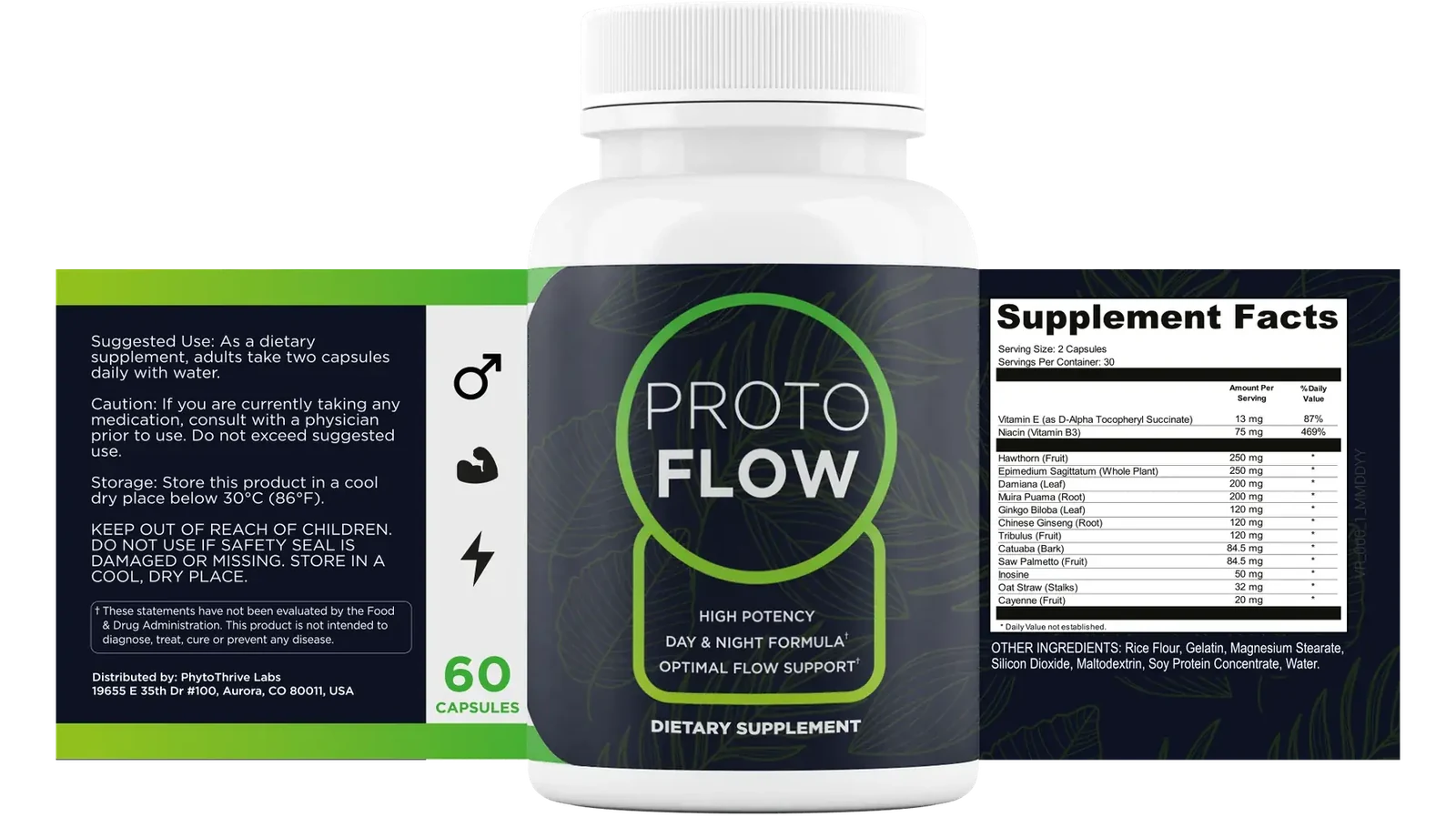
Every US supplement label carries a line, printed after the Supplement Facts panel, headed Other Ingredients. It is where everything that is not an active goes: the fillers, the flow agents, the coatings — and the shell. It is a required statement, written in descending order by weight, and it is the most unglamorous piece of text on the package.
The other-ingredients line on the wrap reads, word for word: “Rice Flour, Gelatin, Magnesium Stearate, Silicon Dioxide, Maltodextrin, Soy Protein Concentrate, Water.” Gelatin is made by boiling down animal collagen — skin, bone and connective tissue, usually bovine or porcine. It is the second ingredient in that row, which on a capsule product means it is almost certainly the shell. The supplied marketing pack ships a round VEGETARIAN mark with a carrot in the middle of it. Those two things cannot both be true of the same bottle.
Why second place in that row matters
On a two-piece capsule the shell is normally one of the largest non-active components in the whole product, which is exactly where gelatin sits here: second, behind rice flour. Nothing about that placement is unusual or suspicious. It is what a gelatin capsule looks like when its label is written correctly.
What gelatin is, and what it is not
It is a protein obtained from collagen — animal connective tissue, hide and bone, simmered until the collagen breaks down into something that will set and then dry into a hard, clear, swallowable shell. It is not a trace, not a processing aid and not a residue: on a capsule it is a structural component and the container the serving arrives in. It is also not a plant, and there is no vegetarian gelatin. The two plant-derived equivalents are hypromellose and cellulose, and neither word appears anywhere on this label.
The marketing layer
What a seal is, and what it is not
Now the other half of the package, which is not part of the bottle at all. The supplied marketing pack ships a round mark: a stylised carrot inside a circle, with the word VEGETARIAN set around it.
A seal is a picture somebody chose
That is not a slur on seals; it is a description of what they are. A roundel in a marketing pack is artwork, drawn and placed by whoever builds the listing page, by somebody who may never have read the wrap. This one carries no certifying body’s name, no scheme and no registration number, so there is nothing about it that could be looked up.
The other-ingredients line is a regulated statement
The contrast is the point. That seven-word row is required, its contents and its order are prescribed, and it describes the physical object. NIH’s Office of Dietary Supplements makes the general version of the point about marks of every kind: “These seals do not guarantee that a product is safe or effective.” The narrower version is simpler still — a mark cannot change what is in the capsule. One says animal, the other says vegetarian, and where they disagree the label is what you are buying and the seal is what you were shown.

The method
Settling it in ten seconds, on any bottle
Turn the bottle over
Ignore the front entirely. Everything worth checking is on the back or the side panel, in the smallest type on the package.
Find the Supplement Facts panel, then read past it
The line you want sits immediately below the panel, headed Other Ingredients.
Read that line for one of three words
Gelatin means an animal shell. Hypromellose or cellulose means a plant one. Those three words cover almost every capsule sold.
Only then look at the seals
If the line and the roundel disagree, you have your answer already.
That is the whole method, and it takes about ten seconds once you know which line to look at. It works in a shop, in a photograph of a label on a listing page, and on a bottle already in the cupboard. It is worth making a habit because the seal is the part designed to be read at a glance and the line is the part designed to be accurate. The gap between them is not always a lie — a listing assembled from a template of marks that were never checked against the artwork is the most likely explanation of what happened here. But a buyer who wants an answer rather than an explanation only needs the line.
Credit where due
The label is not hiding anything
Here is the part that has to be said at the same volume as everything above, because without it this post would be unfair.
The panel conceals nothing
The word gelatin is printed on this wrap. It is in the right place — the other-ingredients row, where a shell belongs. It is in the right order — second, where the weight puts it. It is spelled out in full, with no euphemism standing in for it, and you can only catch a contradiction between a seal and a label when the label is complete enough to contradict.
The rest of this label is unusually good
Fourteen ingredients, fourteen amounts, no proprietary blend. In a men’s botanical formula that is genuinely unusual — a blend is normally where this category hides how little of each herb is in the capsule. Here every figure is printed and every figure can be checked.
So the failure has an address
It is in the marketing layer, not the panel. Somebody assembled a set of roundels for a listing page and one of them was wrong about the bottle it was placed beside. That is a real problem for anyone who relies on it, and a different problem from a label that hides what is in the capsule. For a vegetarian or vegan buyer it settles the purchase; for a buyer with no dietary restriction a gelatin shell is what most capsules have always been. The finding is not that the shell is bad. It is that the bottle and the mark beside it say different things, and only one is binding.
Generalising
The rule worth carrying into any shop
Generalise it, because the same shape appears on shelves nowhere near this one.
The rule
On any capsule, read the other-ingredients line before you read the seal. The shell is where a vegetarian claim is won or lost, and it has only two ordinary answers: gelatin, which is animal, or hypromellose or cellulose, which is not. A seal is a picture somebody chose. The other-ingredients line is a regulated statement of what is in the capsule. Where they disagree, believe the line.
The same logic covers the other roundels
A mark saying gluten free or dairy free on a label that makes neither claim is in the same position: a picture, not a statement, with nothing on the panel behind it. A mark saying 100% natural is weaker again, because “natural” has no fixed legal meaning on a US supplement label at all. NCCIH puts the general case in one sentence: ““natural” does not always mean “safe.” For example, the kava plant is a member of the pepper family but taking kava supplements can cause liver disease.”
What a seal can legitimately tell you
Some marks do carry weight: a third-party testing programme with a named certifier and a public register behind it can be looked up. The test is whether anything about the mark can be checked by you, from outside.
Closing
What to do with this
One line of small type answers a question a whole roundel was drawn to answer differently, and the line wins because the line is the label.
The honest version
The capsule shell on this product is gelatin, which is an animal material, and the label says so plainly in the place a label is supposed to say it. The round mark in the marketing pack disagrees with the bottle it was placed beside, and where those two disagree the bottle is what arrives at your door. If that decides the purchase for you, it decides it. If it does not, the panel behind it is one of the more completely documented we have examined. The supplement facts page prints the whole wrap line by line, and the testing and quality page takes all ten supplied marks one at a time, including this one.
References
Sources
- U.S. Food and Drug Administration. Dietary Supplements. www.fda.gov. Accessed September 24, 2026.
- Office of Dietary Supplements, National Institutes of Health. Dietary Supplements: What You Need to Know. ods.od.nih.gov. Accessed September 24, 2026.
- National Center for Complementary and Integrative Health, NIH. Using Dietary Supplements Wisely. www.nccih.nih.gov. Accessed September 24, 2026.
- U.S. Food and Drug Administration. Structure/Function Claims. www.fda.gov. Accessed September 24, 2026.
Order Protoflow from the official page
60 capsules a bottle, two capsules a day with water, so thirty days a bottle. Fourteen ingredients with fourteen published amounts and no proprietary blend, which is the reason every check on this site can be run at all. The capsule shell is gelatin. 60 days from purchase to change your mind. The order desk is +1 (302) 200-3480.
Price shown at checkout · 60-day window from the date of purchase · ships from inside the US · the label’s own support line is +1 (302) 200-3480
Next
Keep reading
The whole label, panel by panel
Every printed line on the wrap, including the other-ingredients row this post turns on.
Read it →Ten marks, read one at a time
What each roundel in the supplied pack means, and which one the bottle contradicts.
Read it →Seven herbs with no federal page
What an absent consumer summary is, and what it is not.
Read it →