Prostate question
Is ProtoFlow Good for Your Prostate? What the Label and NIH Actually Say
Many people type the brand name next to the word prostate. This page checks that pairing against the bottle itself, then against the government pages that exist.
Quick answer
The ProtoFlow label never mentions the prostate. Its claim is “optimal flow support”, with the FDA disclaimer. No trial of the formula exists, and NIH says saw palmetto gives little or no benefit for enlarged prostate symptoms. So nobody can say it is good for the prostate. Urinary symptoms need a doctor first.
On this page
- Is ProtoFlow good for your prostate?
- Does the ProtoFlow label say it is for the prostate?
- Key facts
- What does NIH say about the herb people buy for prostate symptoms?
- Could any other ProtoFlow ingredient help a prostate?
- What should you do about prostate symptoms before buying anything?
- Is ProtoFlow a prostate medicine?
- Which label, price and guarantee details apply to this question?
- Frequently asked questions
- Which sources does this page use?
- Our view
Is ProtoFlow good for your prostate?
Nobody can honestly say yes. To call a product good for an organ, you would want a study of that product, in men, with that organ measured. No such study of ProtoFlow has been published.
Nobody can honestly say no, either. Absence of a study is not a finding of harm. It simply means the question has no evidence behind it in either direction.
What we can do is read the bottle and the government pages carefully. That is the plan for the rest of this page. It will not give you a verdict on your own prostate, because no web page can do that. Only an exam and tests from a clinician can.
Does the ProtoFlow label say it is for the prostate?
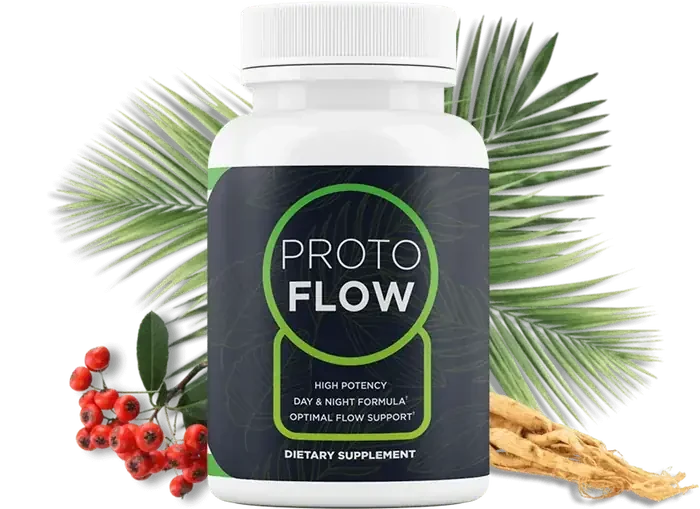
No. Search results pair the name with the word prostate. The bottle does not. Here is every front-of-label line, with what it does and does not say.
| Label line | What it says | What it does not say |
|---|---|---|
| PROTO FLOW | The product name | No condition and no body part |
| HIGH POTENCY | A marketing phrase | It has no legal definition, so it sets no standard |
| DAY & NIGHT FORMULA (dagger) | A formula claim with the disclaimer mark | How to split the capsules; the directions do not |
| OPTIMAL FLOW SUPPORT (dagger) | A support-style claim | Flow of what; the label never says |
| 60 CAPSULES, DIETARY SUPPLEMENT | Count and category | Anything about treating a disease |
The dagger points to the standard FDA disclaimer. In short, the disclaimer tells you that FDA has not judged the claim, and that the product is not meant to diagnose, treat, cure or prevent disease.
Key facts
- The label names no organ and no condition. Its claim is “optimal flow support”.
- No trial of ProtoFlow has been published, in men or anyone else.
- NCCIH: a 2023 review of 27 studies found saw palmetto gives little or no benefit for BPH symptoms.
- The saw palmetto row is 84.5 mg of unstandardised fruit. Trials used about 320 mg of standardised extract.
- NCCIH has no page for seven of the eleven botanicals.
- MedlinePlus warns that urinary symptoms can point to a more serious health problem.
- ProtoFlow is a supplement, so FDA has not approved it, just as it approves no supplement.
What does NIH say about the herb people buy for prostate symptoms?
That herb is saw palmetto. It is the one ingredient on the panel that most shoppers link to an enlarged prostate, also called BPH.
NCCIH looked at the research. A 2023 review of 27 studies found that saw palmetto, when used alone, gives little or no benefit for BPH symptoms. Two further trials were no more encouraging: saw palmetto did not improve symptoms in either.
There is a kinder note too. NCCIH calls saw palmetto well tolerated, and says it does not appear to change readings of prostate-specific antigen, or PSA. That is useful to know if you have regular blood tests.
Then look at the amount. The ProtoFlow panel lists 84.5 mg of saw palmetto fruit, and the label gives no extract ratio or standardisation. The trials used about 320 mg of standardised extract. So the bottle holds roughly a quarter of the studied amount, in a form nobody has described.
Could any other ProtoFlow ingredient help a prostate?
Go down the panel and ask the same question of each herb. The answer is the same every time: no government page ties it to the prostate.
- Hawthorn, 250 mg. NCCIH covers it for heart failure, where the evidence is conflicting. That is a different question.
- Ginkgo, 120 mg. NCCIH puts it flatly: no conclusive evidence that it helps with any health condition.
- Chinese ginseng, 120 mg. The NCCIH page on Asian ginseng reports a possible benefit for sexual function in men with erectile dysfunction. That is not a prostate finding.
- The remaining seven. Tribulus, damiana, cayenne, oat straw, catuaba, epimedium and muira puama have no NCCIH page. Silence there means no summary was written, not that they were cleared.
The label itself uses the word “flow” without saying what flows. A reader can fill that gap with hope. A careful reader leaves it empty until someone shows data.
What should you do about prostate symptoms before buying anything?
Treat symptoms as a medical question first. MedlinePlus is blunt that the symptoms of an enlarged prostate may have a more serious cause, so it tells you to see your health care provider.
Here is a simple order of steps.
- Write down what you notice. Note when it happens and how long it has lasted.
- Book a visit. Ask what could explain it and what tests make sense.
- Bring the bottle. Show the clinician the whole Supplement Facts panel and the caution line.
- Ask about interactions. Three rows on this panel carry bleeding cautions, and one carries a niacin amount above its limit.
- Decide afterwards. If a supplement still appeals, you will know it is not standing in for care you needed.
Is ProtoFlow a prostate medicine?
No. The label calls it a dietary supplement, and the FDA disclaimer says it is not meant to treat any disease. FDA does not approve dietary supplements before they are sold, so ProtoFlow is not FDA approved, and neither is any other supplement.
FDA allows structure and function claims on supplements, as long as they carry that disclaimer. “Optimal flow support” is written in that style. It describes support for a body process in general terms. It is not a promise to fix a problem.
That is why the wording matters. If a page tells you a capsule treats, shrinks or cures a prostate problem, it is claiming something only a drug may claim. This page makes no such claim, and the label does not either.
Which label, price and guarantee details apply to this question?
| Item | What is published |
|---|---|
| Form and count | Capsules, 60 to a bottle |
| Directions | Adults take two capsules daily with water |
| Saw palmetto | 84.5 mg of fruit per serving, no extract ratio |
| Trial of the formula | None published |
| Medication note on the bottle | Anyone on medication is told to see a physician first |
| Price | Not published here; shown at checkout |
| Money-back window | Sixty days from purchase; a longer window only if the sales page prints one |
Frequently asked questions
Is ProtoFlow good for your prostate?
That cannot be said. The label names no organ, no trial of the formula exists, and NIH reports little or no benefit from saw palmetto for enlarged prostate symptoms.
Is ProtoFlow a prostate medicine?
No. It is a dietary supplement. The label carries the FDA disclaimer, and the product is not FDA approved.
Does ProtoFlow contain saw palmetto?
Yes, 84.5 mg of saw palmetto fruit per serving of two capsules. The label gives no extract ratio. NIH trial amounts were about 320 mg of standardised extract.
Will ProtoFlow change my PSA test?
Nothing is published about the formula as a whole. NCCIH says saw palmetto does not appear to affect PSA readings. Tell your doctor about every supplement before a PSA test.
Should I see a doctor before trying ProtoFlow for urinary symptoms?
Yes. MedlinePlus says these symptoms could be from a more serious health problem. A supplement should not stand in for an exam.
Can I take ProtoFlow with prostate medicine?
Ask your doctor or pharmacist first. The label says anyone taking medication should consult a physician before use, and three rows carry bleeding cautions.
Which sources does this page use?
Label facts come from the bottle and the seller's pack. Ingredient and symptom statements come from these government pages, none of which studied ProtoFlow.
- National Center for Complementary and Integrative Health, NIH. Saw Palmetto. www.nccih.nih.gov
- National Center for Complementary and Integrative Health, NIH. Herbs at a Glance. www.nccih.nih.gov
- National Center for Complementary and Integrative Health, NIH. Ginkgo. www.nccih.nih.gov
- National Center for Complementary and Integrative Health, NIH. Asian Ginseng. www.nccih.nih.gov
- National Center for Complementary and Integrative Health, NIH. Hawthorn. www.nccih.nih.gov
- MedlinePlus, U.S. National Library of Medicine. Enlarged Prostate (BPH). medlineplus.gov
- MedlinePlus, U.S. National Library of Medicine. Erectile Dysfunction. medlineplus.gov
- U.S. Food and Drug Administration. Structure/Function Claims. www.fda.gov
- Office of Dietary Supplements, National Institutes of Health. Dietary Supplements: What You Need to Know. ods.od.nih.gov
Our view
Our view is that the prostate link is something shoppers bring to the bottle. The bottle does not make it. The label stays with “flow support” and says no more.
That restraint is to the label's credit. It is also why the honest answer to the headline question is that no one knows. The one herb people buy for this reason has a poor federal record for it, and the dose here is small.
If you have symptoms, see a clinician first. If you are well and curious, read the whole panel and the cautions, and decide with a pharmacist who knows your medicines.
Keep reading:
Last updated . Medically reviewed by Dr. Al Borhan, MD, Physician on the same date. This page is general information, not medical advice.