Evidence check
Does ProtoFlow Really Work? What the Evidence Covers and What It Does Not
Everyone wants a yes or a no. The honest answer is shorter and less comfortable, and it starts with what has never been measured.
Quick answer
No trial of ProtoFlow itself has been published, so nobody can say from evidence that it works. NIH pages cover only four of its 11 herbs, and most report little or no benefit. One, Asian ginseng, shows a narrow positive finding for erectile function. Results vary and are never promised.
On this page
- What would ‘works’ even mean for a flow supplement?
- Has anyone tested ProtoFlow in a trial?
- Key facts
- What do NIH pages say about the herbs inside ProtoFlow?
- Are the amounts in ProtoFlow close to the amounts that were studied?
- Does ProtoFlow work for prostate?
- How can you judge fairly whether ProtoFlow works for you?
- What are the label, price and guarantee facts?
- Frequently asked questions
- Which sources does this page use?
- Our view
What would ‘works’ even mean for a flow supplement?
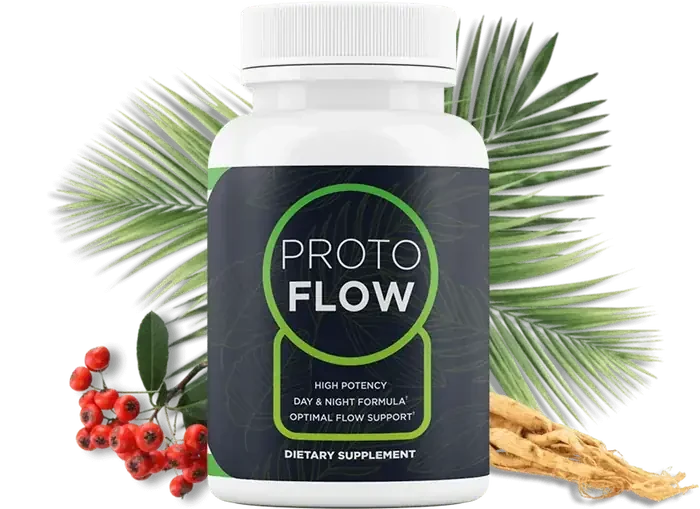
Before asking if something works, you need to know what it is meant to do. Here the bottle gives a vague answer. The front says “Optimal Flow Support” and “Day & Night Formula”, each with a dagger. The dagger points to the standard FDA statement on the same label. It says these statements have not been evaluated and the product is not meant to diagnose, treat, cure or prevent any disease.
The claim never says flow of what. It names no organ and no condition. That is a careful way to write a supplement label, and it also means the product has no stated finish line. If a buyer has a private goal in mind, the label does not promise to meet it.
So “does it work” splits into smaller questions. Has anyone tested this exact capsule? What do government reviews say about each herb in it? Are the amounts anywhere near the amounts that were studied? And how would you, one person, tell if you got a benefit? We take them in that order.
Has anyone tested ProtoFlow in a trial?
No. No trial of this formula has been published, at any dose, over any period, in any group of people. That is true for the seller, for the brand and for this site. When a page tells you ProtoFlow “is proven”, it has nothing to point to.
The seller’s listing does give a number: most buyers waited 3 to 6 weeks. We print it because it was supplied, but its source is a review block that the seller’s own pack calls layout copy only. It describes when a buyer starts to wonder, not when anything happens.
You may also see searches for “protoflow before and after”. We have no before-and-after photos, no lab values and no measured outcomes to show. None were supplied, and inventing them would be wrong.
Key facts
- No trial of the ProtoFlow formula has been published.
- Four of the 11 botanicals have an NIH consumer page: hawthorn, ginkgo, Asian ginseng and saw palmetto.
- Seven have no NIH consumer page: epimedium, damiana, muira puama, catuaba, tribulus, oat straw and cayenne.
- Three of the four covered herbs report little or no benefit, no conclusive evidence, or conflicting evidence.
- Asian ginseng is the one positive finding, and it is narrow.
- Saw palmetto is 84.5 mg per serving, against about 320 mg of a standardised extract in trials.
- No botanical on the panel carries an extract ratio or standardisation.
- ProtoFlow is a dietary supplement. It is not FDA approved and promises no result.
What do NIH pages say about the herbs inside ProtoFlow?
The National Center for Complementary and Integrative Health, part of NIH, writes short plain-language pages on herbs. Here is what four of them say, set against the amount on the ProtoFlow panel.
| Herb on the label | Amount per serving | What the NIH page reports |
|---|---|---|
| Saw palmetto (fruit) | 84.5 mg | A 2023 review of 27 studies found it “provides little or no benefit for BPH symptoms”. It is well tolerated and does not appear to affect PSA readings. |
| Ginkgo biloba (leaf) | 120 mg | “No conclusive evidence” that it helps any health condition. It may raise bleeding risk with anticoagulants. |
| Hawthorn (fruit) | 250 mg | Studied in heart failure, with conflicting evidence. Nobody has tested whether it is safe past 16 weeks. |
| Chinese ginseng (root) | 120 mg | Listed by NIH as Asian ginseng. It seems to improve sexual function in people with erectile dysfunction. |
Read that table slowly. The only upbeat line is the last one, and it concerns erectile function in a medical condition, studied with a particular preparation. The bottle does not claim it and we cannot say this capsule matches it. The saw palmetto line is the one most buyers care about, and it is a finding of little or no benefit for a specific symptom group.
For the other seven botanicals there is no NIH consumer page at all. That is an absence of published research, not a finding of harm and not a finding of benefit. It means a buyer is relying on trust for those rows.
Are the amounts in ProtoFlow close to the amounts that were studied?
Only one row can be checked this way. NIH notes that saw palmetto trials use about 320 mg of a standardised extract. ProtoFlow has 84.5 mg of saw palmetto fruit, with no standardisation. That is roughly a quarter of the studied amount, and the comparison is generous because a plain powder and a concentrated extract are different things.
For the rest, no studied amount is given. And not one of the 11 botanicals states an extract ratio or a marker compound. So every milligram figure on the panel tells you weight, not strength. Two products can both print “250 mg” and act very differently.
To be fair, the panel prints all 14 amounts. A blend would hide them. Because ProtoFlow shows them, you can do this comparison at all.
Does ProtoFlow work for prostate?
The label does not claim it. No organ is named anywhere on the front. Some websites that sell or discuss the product pair it with prostate language, but the bottle itself does not, and the bottle is the document that counts.
What can be said is limited. ProtoFlow contains saw palmetto, and NIH reports little or no benefit from saw palmetto taken alone for BPH symptoms. It also contains 10 other botanicals plus inosine and two vitamins, and no trial has tested the mix.
MedlinePlus adds a point that matters more than any supplement. Urinary symptoms “could be from a more serious health problem”. The same is true of erectile difficulty, which MedlinePlus says can be a sign of health problems such as clogged blood vessels or nerve damage from diabetes. A supplement is not a way to find out which one you have. A doctor is.
How can you judge fairly whether ProtoFlow works for you?
If you decide to try it, make the test honest. This is a practical routine, not medical advice.
- Write down, before the first capsule, what you want to notice and how you would describe it today.
- Write down the purchase date. The 60-day window runs from that day, not from your first capsule.
- Take it as the label says, two capsules daily with water, and change nothing else for a while, so you are not guessing which change did what.
- Note any flushing, stomach upset, headache or poor sleep. These are the effects the published pages describe for its ingredients.
- Set a reminder around day 50. That leaves time to call the order desk before the window closes.
One bottle is 30 days. If you stop and judge it after one bottle, you still have a month of the guarantee left. Larger packs run past the window, so with those you are deciding on day one about months of supply.
What are the label, price and guarantee facts?
A short sheet of the facts that matter when you judge a product like this.
| Item | What is published |
|---|---|
| Label claims | “Optimal Flow Support” and “Day & Night Formula” (both marked with a dagger) |
| Trial of this formula | None published |
| Seller’s timing figure | 3 to 6 weeks, from a review block the pack calls layout copy |
| Directions | Two capsules daily with water |
| Bottle size | 60 capsules, which is 30 days |
| Price | Not published here. Shown at checkout |
| Guarantee | 60 days from purchase, unless the sales page prints longer |
Frequently asked questions
Does ProtoFlow actually work?
Nobody can say from evidence, because no trial of the formula has been published. NIH pages cover four of the 11 herbs, and three of those four report little or no benefit, no conclusive evidence or conflicting evidence. Treat any promise of results as the seller’s opinion.
How long does ProtoFlow take to work?
Not published. The seller’s listing says most buyers waited 3 to 6 weeks, but that comes from a review block the pack calls layout copy. It describes when buyers started to judge it, not a proven timeline.
Is there any positive evidence for the ingredients?
One row. NIH says oral Asian ginseng seems to improve sexual function in people with erectile dysfunction. ProtoFlow lists 120 mg of unstandardised Chinese ginseng root, so the result may not carry over to this capsule.
Will ProtoFlow work for me?
That cannot be predicted. Results vary and none is promised. A fair test is to note what you want to see before you start, follow the label, and decide before the 60-day window ends.
Is ProtoFlow effective for an enlarged prostate?
The label makes no such claim. NIH reports little or no benefit from saw palmetto alone for BPH symptoms. If you have urinary symptoms, see a doctor, because MedlinePlus says they could come from a more serious problem.
Are there before and after results for ProtoFlow?
None are published here. No photos, lab values or measured outcomes were supplied, so we do not show any.
Which sources does this page use?
Facts about the product come from the printed bottle label and the seller’s pack. Research statements come from the government pages below. None of these pages studied Protoflow.
- National Center for Complementary and Integrative Health, NIH. Saw Palmetto. www.nccih.nih.gov
- National Center for Complementary and Integrative Health, NIH. Ginkgo. www.nccih.nih.gov
- National Center for Complementary and Integrative Health, NIH. Hawthorn. www.nccih.nih.gov
- National Center for Complementary and Integrative Health, NIH. Asian Ginseng. www.nccih.nih.gov
- National Center for Complementary and Integrative Health, NIH. Herbs at a Glance. www.nccih.nih.gov
- MedlinePlus, U.S. National Library of Medicine. Enlarged Prostate (BPH). medlineplus.gov
- MedlinePlus, U.S. National Library of Medicine. Erectile Dysfunction. medlineplus.gov
- National Center for Complementary and Integrative Health, NIH. Using Dietary Supplements Wisely. www.nccih.nih.gov
Our view
Our view is that “does it work” cannot be answered with a yes today. It also cannot be answered with a flat no, because nobody has tested it. What is known is mixed and mostly modest. Three covered herbs report little or no benefit, no conclusive evidence or conflicting evidence. One covered herb has a narrow positive finding. Seven herbs have no federal summary.
That is a reason for modest expectations, not a reason for fear. The label is open and the guarantee gives you a way out. If you try ProtoFlow, treat it as a personal experiment with a clear start date and a clear decision date.
And if the reason you are looking is a symptom, put the doctor first. A urinary or sexual symptom is a medical question before it is a shopping question. No supplement is FDA approved, and none replaces care.
Keep reading:
Last updated . Reviewed by Dr. Al Borhan, MD, Physician on the same date. This page is general information, not medical advice.