Label law
Is ProtoFlow FDA Approved? What the Label, the Seals and the Law Say
Short answer first, then the longer story. The seals on the box make the short answer feel less clear than it is.
Quick answer
No. ProtoFlow is not FDA approved, and no dietary supplement is approved before it is sold. The pack shows an FDA-registered facility mark, which is a filing, not an approval. The label carries the standard FDA disclaimer. The seller, not the agency, must stand behind the claims.
On this page
- Is ProtoFlow FDA approved?
- Why is no dietary supplement FDA approved before sale?
- Key facts
- What does “made in an FDA-registered facility” actually mean?
- What does the dagger and the FDA disclaimer on the ProtoFlow label mean?
- What does “GMP certified” mean, and who certified ProtoFlow?
- Are prostate supplements approved by the FDA?
- Which marks on the ProtoFlow pack are approvals, and which are not?
- How can you check a supplement's claims for yourself?
- What are the ProtoFlow label, price and guarantee facts?
- Frequently asked questions
- Which sources does this page use?
- Our view
Is ProtoFlow FDA approved?
No. ProtoFlow is a dietary supplement. It is not a drug, and it is not FDA approved. The same is true of every other product in the supplement aisle, which is why searches like “is ProtoFlow FDA approved” and “prostate supplements approved by FDA” lead to the same place.
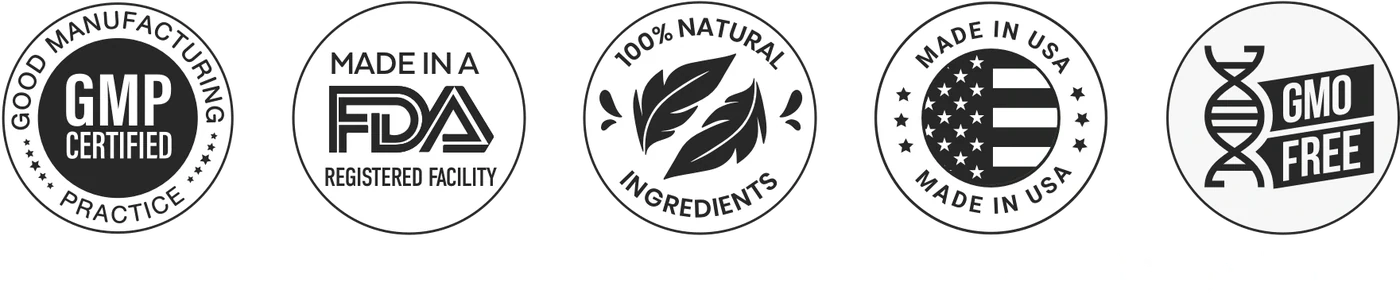
The confusion is understandable. The marketing pack for ProtoFlow includes a round mark that says “Made in an FDA-registered facility”. It sits beside a GMP mark and a “made in USA” mark. A quick glance reads as a stamp of approval. It is not one, and the sections below show why.
Why is no dietary supplement FDA approved before sale?
NIH's Office of Dietary Supplements puts it plainly: the FDA “does not determine whether dietary supplements are effective before they are marketed”. A supplement does not go through the approval path that a prescription drug does.
Responsibility sits with the company. ODS says supplement companies “are responsible for having evidence that their products are safe, and the label claims are truthful and not misleading”. The FDA says it “has the authority to take action against any adulterated or misbranded dietary supplement product after it reaches the market”.
Notice the order of events. The product reaches the shelf first. The agency can act afterwards. For a buyer, that means the claim you read on the front has not been signed off by anyone in government.
Key facts
- ProtoFlow is a dietary supplement. It is not FDA approved, and the label does not say it is.
- The label prints the FDA disclaimer in a box, and the front-of-label claims point to it with a dagger.
- “Made in an FDA-registered facility” is a mark about a filing, not an inspection result or an approval.
- “GMP certified” is a process mark. No certifying body, audit date or scope is named in the material we were given.
- The pack calls its lot and certificate numbers draft labels. No certificate document was supplied.
- No manufacturer is named on the label. A distributor, PhytoThrive Labs of Aurora, Colorado, is.
- Seals “do not guarantee that a product is safe or effective”, says NIH ODS.
What does “made in an FDA-registered facility” actually mean?
Facilities that make supplements have to register with the FDA. Registration is a duty, like telling the tax office a business exists. It is not a test the factory passed.
So the mark is true in the narrow sense that a registration can exist, and misleading if you read it as “the FDA checked this product”. The two ideas sit far apart. ProtoFlow's pack does not name the facility, the registration number, or any inspection date. That detail is not published.
What does the dagger and the FDA disclaimer on the ProtoFlow label mean?
The front of the bottle says “Day & night formula” and “Optimal flow support”. Each has a small dagger beside it. The dagger points to a boxed statement on the same wrap: “These statements have not been evaluated by the Food & Drug Administration. This product is not intended to diagnose, treat, cure or prevent any disease.”
That is how a supplement claim is meant to be written. FDA describes a structure/function claim as one that describes the role of a nutrient or ingredient in the normal structure or function of the body. Such claims are not pre-approved. The maker must hold evidence that the claim is truthful and must send FDA a notice within 30 days of marketing the product with the claim.
A notice is a filing, not a review. Whether ProtoFlow's maker sent one is not published. The wording itself is careful. It does not name a disease, an organ or a hormone, which is the correct way to stay inside the rule.
What does “GMP certified” mean, and who certified ProtoFlow?
GMP stands for good manufacturing practice. Good manufacturing practice is about how a factory keeps records, cleans equipment and tracks a batch. It is a real discipline, and it speaks about a building and its habits.
It does not say the formula works. It does not confirm that the amounts on the panel are correct. And on ProtoFlow's pack, nobody is named as the certifier, no audit date is given, and no scope is stated. Treat the mark as a picture until a document stands behind it.
Are prostate supplements approved by the FDA?
No prostate supplement is approved by the FDA. If a product could treat an enlarged prostate, it would be a drug, and it would go through a different route. A supplement has to stay on the supplement side of the line.
That is why ProtoFlow's label never says “prostate”. MedlinePlus describes an enlarged prostate as a medical condition with symptoms that “could be from a more serious health problem”. A supplement may not claim to treat it. If you have those symptoms, see a doctor.
A related warning comes from the FDA itself. It keeps a public list of tainted sexual enhancement and energy products, and says such products “are sometimes falsely advertised as dietary supplements”. ProtoFlow is not on that list. The FDA also says its list “covers only a small fraction of the contaminated products on the market”, so absence is not proof of safety. We mention this as category context only, not as a charge against this product.
Which marks on the ProtoFlow pack are approvals, and which are not?
| Mark | What it can tell you | Is it an FDA approval? |
|---|---|---|
| FDA-registered facility | A facility filed a registration | No |
| GMP certified | A process mark about records; certifier not named | No |
| Made in USA | Usually that the bottle was filled here; botanical origins not stated | No |
| GMO free | A sourcing claim; no document supplied | No |
| 100% natural | No fixed legal meaning on a US supplement label | No |
| Vegetarian | Contradicted by the label, which names gelatin | No |
| Doctor formulated | No clinician is named anywhere in the material | No |
Of all the marks, the vegetarian one is the one most likely to mislead. Gelatin sits in the other-ingredients line, and gelatin is made from animal collagen. When a mark and a label disagree, believe the label.
How can you check a supplement's claims for yourself?
- Read the front claim. Does it name a disease? If so, be careful.
- Find the dagger and read the boxed disclaimer.
- Read the other-ingredients line, then the seals.
- Look for a named manufacturer, a lot number and a way to reach the company.
- Check whether NCCIH or ODS has a page on each ingredient.
ProtoFlow passes the first two checks well. It prints no disease claim and it prints the disclaimer. It is weaker on the fourth, because the label has no phone, email or website and names no manufacturer.
What are the ProtoFlow label, price and guarantee facts?
| Item | What is published |
|---|---|
| Product type | Dietary supplement; not FDA approved |
| Distributor on the label | PhytoThrive Labs, Aurora, CO |
| Manufacturer | Not named |
| Lot and certificate references | PRO-26/TH-1902 and PRO-1902-26-TH, both described by the pack as draft labels |
| Expiry date | Not published |
| Price | Not listed on this site; read it at checkout |
| Guarantee | A 60-day money-back window; the sales page may print a longer term |
Frequently asked questions
Is ProtoFlow FDA approved?
No. ProtoFlow is a dietary supplement, and no supplement is approved by the FDA before it is sold. The label carries the standard disclaimer that its statements have not been evaluated.
Is ProtoFlow made in an FDA-registered facility?
The pack shows a mark that says so. A registration is a filing, not an approval or an inspection result, and the facility is not named in the material we were given.
Are prostate supplements approved by the FDA?
No. A product that treats a disease would be a drug. A supplement may only make careful structure or function claims, with the FDA disclaimer printed alongside.
What does GMP certified mean on the ProtoFlow pack?
It is about a factory's record-keeping, not the formula. No certifying body, audit date or scope is named, and it is not an approval.
Who is responsible for ProtoFlow's claims, if not the FDA?
The company. NIH ODS says supplement companies must have evidence that products are safe and that label claims are truthful and not misleading. The agency can act after a product reaches the market.
Does the FDA tainted products list include ProtoFlow?
No. The FDA list covers only a small fraction of contaminated products, so absence is not proof of safety. Nothing published says ProtoFlow contains an undeclared drug.
Which sources does this page use?
Label facts come from the printed ProtoFlow wrap and the seller's pack. Regulatory statements come from these government pages.
- U.S. Food and Drug Administration. Structure/Function Claims. www.fda.gov
- U.S. Food and Drug Administration. Dietary Supplements. www.fda.gov
- U.S. Food and Drug Administration. Tainted Sexual Enhancement and Energy Products. www.fda.gov
- Office of Dietary Supplements, National Institutes of Health. Dietary Supplements: What You Need to Know. ods.od.nih.gov
- National Center for Complementary and Integrative Health, NIH. Using Dietary Supplements Wisely. www.nccih.nih.gov
- MedlinePlus, U.S. National Library of Medicine. Enlarged Prostate (BPH). medlineplus.gov
Our view
Our view is that the question “is ProtoFlow FDA approved” has a clear answer, and the clear answer is the same for every supplement. No.
What matters more is the second question: does the label behave as a supplement label should? On the front, yes. The claims are modest and the disclaimer is printed. On the seals, less so. Several marks look like endorsements and are not.
Use the label as your guide. Where a seal and the ingredient line disagree, trust the line. Where a mark names no certifier, treat it as decoration.
Keep reading:
Last updated . Medically reviewed by Dr. Al Borhan, MD, Physician on the same date. This page is general information, not medical advice.