Protoflow blog
Seven of Eleven: The Herbs No Federal Page Covers
No page is not the same as no effect. It is worth knowing exactly what it is instead.
Start here
Fifty-three herbs, and eleven in the bottle
The National Center for Complementary and Integrative Health, part of the NIH, publishes a series called Herbs at a Glance. Each entry is a short, plain-language summary of one herb: what it is, what it has been studied for, what the studies found, and what is known about its safety. The series covers fifty-three herbs.
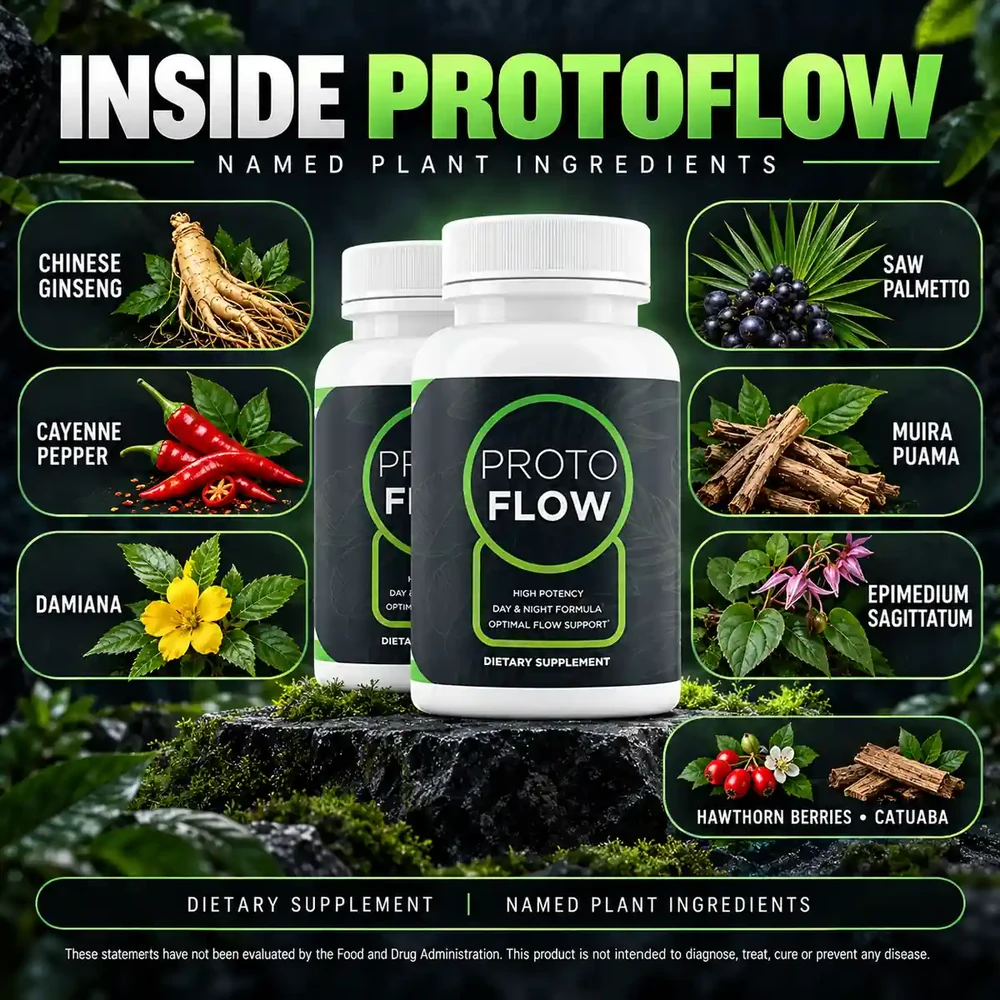
This formula contains eleven botanicals. Four of them have a page in that series. Seven do not. That count is the whole of this post, and the first half of it is spent on what the count means, because an absence is the easiest thing on a supplement label to misread.
Reading an absence
What an absent page actually is
Take the absence carefully, because it is neither of the two things people assume.
It is not a finding of harm
No federal body has looked at epimedium or catuaba and concluded that either is dangerous. Nothing has been withdrawn, warned about, or reviewed and rejected. There is no finding at all, which should not be reported as a negative one.
It is not a finding of nothing either
Equally, no page does not mean a plant is inert. Plenty of herbs with long traditional use have never been through the kind of research programme a consumer summary needs, and their absence describes the research, not the plant.
What it is
It is a statement about published human evidence. A body like NCCIH writes a consumer summary when there is enough research on people to say something useful and defensible about what a herb has been studied for and how safe it appears to be. Where that research is thin, scattered, or confined to animal work, there is nothing to summarise. That makes the absence a measurement of something other than the herb: of how much you can find out about it before you swallow it.
The count
The seven with no page
| Botanical | Amount per serving | Where it sits on the panel |
|---|---|---|
| Epimedium Sagittatum (Whole Plant) | 250 mg | The joint-largest row |
| Damiana (Leaf) | 200 mg | Third by weight |
| Muira Puama (Root) | 200 mg | Third by weight |
| Tribulus (Fruit) | 120 mg | Mid-panel |
| Catuaba (Bark) | 84.5 mg | Lower half |
| Oat Straw (Stalks) | 32 mg | Second smallest row |
| Cayenne (Fruit) | 20 mg | The smallest row on the panel |
Seven rows, carrying the majority of the botanical weight between them.
Look at where those seven sit rather than how many there are. The joint-largest botanical row on this panel is epimedium, and it has no page; the two rows immediately below it, damiana and muira puama at 200 mg each, have no page. That is not a handful of minor additions at the bottom of a list; it is the front half of the formula.
The four with a page, for contrast
Hawthorn at 250 mg, ginkgo at 120 mg, Chinese ginseng at 120 mg and saw palmetto at 84.5 mg are the four covered — and being covered turns out not to be the consolation it sounds like.
The evidence
The four that are covered
NCCIH publishes a plain-language summary called Herbs at a Glance covering fifty-three herbs. Four of this formula’s eleven botanicals have a page there: hawthorn, ginkgo, Asian ginseng and saw palmetto. Seven do not — epimedium, damiana, muira puama, catuaba, tribulus, oat straw and cayenne. And the four that are covered are not a good result for the bottle. NCCIH on saw palmetto: a 2023 review of 27 studies found the herb “provides little or no benefit for BPH symptoms”. On ginkgo: “There’s no conclusive evidence that ginkgo is helpful for any health condition.” On hawthorn: “There is conflicting evidence on the effects of hawthorn in people with heart failure.” Only Asian ginseng returns anything positive, and the finding is narrow: it “seems to improve sexual function in people with erectile dysfunction”.
One thing worth adding to that
The hawthorn research was not run on anything this bottle is sold for. NCCIH: “Hawthorn has been studied for heart failure in people. Heart failure is a condition in which the heart can’t pump as much blood as it should.”
So the count cuts both ways
Seven rows have no summary, and of the four that do, three report little benefit, no conclusive evidence, or conflicting evidence. One row out of eleven returns a specific positive finding. None of that is our characterisation: every clause above is quoted from the federal page that wrote it.
The arithmetic
The one row we can draw to scale
The dashed track is the roughly 320 mg of standardised extract used in the trials NCCIH summarises. The solid bar is what this panel declares, at the label’s two-capsule serving.
There is exactly one row on this panel where a published reference amount exists to draw a bar against, and it is saw palmetto. The trials NCCIH summarises use a standardised extract at roughly 320 mg a day. This panel declares 84.5 mg, and no standardisation.
Two gaps, not one
The first gap is the quantity: about a quarter of the studied amount. The second is harder to see and matters more. A studied dose is a dose of a defined preparation — an extract standardised to a stated percentage of particular compounds. This label prints “Saw Palmetto (Fruit) 84.5 mg” and nothing else, so milled fruit and a concentrated extract look identical on the page and are not the same product.
Why there is only one bar here
Because drawing a second would mean inventing a reference figure, and for the other ten botanicals no published studied dose exists that we could stand behind. None of this is an argument about safety: a smaller amount than a trial used is a different amount from the one that produced the finding, not a dangerous one.
The practical use
What the absence means for a buyer
So what is a buyer to do with a count like seven of eleven?
It tells you how much of the bottle you are buying on trust
For four rows there is a page you can read in five minutes, written by somebody with no stake in the sale. For seven rows there is not. That does not make those seven rows worse; it makes them unresearchable from where you are standing, which is a risk you can at least size accurately.
It changes what the caution line is doing
The label says to consult a physician before use if you are taking any medication, and on this formula that is the right instruction. Part of the reason is here: a pharmacist can look up an interaction for the four covered botanicals and has much less to work with on the other seven.
It is knowable before you pay
Standardisation, manufacture, batch — almost every other question about a supplement can only be answered by somebody inside the company. Whether a federal body has written a page about an ingredient you can establish yourself, before the parcel is packed.
Credit where due
Why this audit is possible at all
Now the part that has to be said at the same volume, or the post is unfair.
Every number above was read straight off the panel
Fourteen rows, fourteen individual amounts, no proprietary blend, and a serving size that is the same two capsules the directions ask for. The count of seven was possible because all eleven botanicals are named and all eleven carry a figure.
Most of this category does not do that
The common alternative is a proprietary blend: several botanicals gathered under an invented name, one total weight printed, and the members listed in descending order with no individual figures. On a label like that the comparison drawn above would be impossible — you would know saw palmetto was present and nothing about how much.
So the criticism and the credit are the same fact
This formula can be audited this precisely because its label publishes enough to make the audit possible. A less transparent product with an identical formula would read as unimpeachable. Disclosure makes a product easier to criticise, which is the reason a reader should reward it rather than punish it.
Closing
What to do with the count
A count of absent pages is not a verdict. It is a map of where the published information stops, and it is worth having before you pay rather than afterwards.
The rule
Absence of a federal page is not evidence that a herb does nothing. It means no federal body has found enough published human research to write a consumer summary about it. On a fourteen-row panel, knowing which rows are in that position tells you how much of the bottle you are buying on trust.
The honest version
Seven of these eleven botanicals have no federal consumer summary, and that is an absence of published research rather than a finding against them. Of the four that do have one, three report little or no benefit, no conclusive evidence, or conflicting evidence. Set against that, this label publishes fourteen amounts and hides nothing behind a blend, which is why every sentence above could be written at all. The ingredients page takes all fourteen rows one at a time, and the side effects page collects every federal safety statement that touches this bottle.
References
Sources
- National Center for Complementary and Integrative Health, NIH. Herbs at a Glance. www.nccih.nih.gov. Accessed September 24, 2026.
- National Center for Complementary and Integrative Health, NIH. Saw Palmetto. www.nccih.nih.gov. Accessed September 24, 2026.
- National Center for Complementary and Integrative Health, NIH. Ginkgo. www.nccih.nih.gov. Accessed September 24, 2026.
- National Center for Complementary and Integrative Health, NIH. Hawthorn. www.nccih.nih.gov. Accessed September 24, 2026.
- National Center for Complementary and Integrative Health, NIH. Asian Ginseng. www.nccih.nih.gov. Accessed September 24, 2026.
Order Protoflow from the official page
60 capsules a bottle, two capsules a day with water, so thirty days a bottle. Fourteen ingredients with fourteen published amounts and no proprietary blend, which is the reason every check on this site can be run at all. The capsule shell is gelatin. 60 days from purchase to change your mind. The order desk is +1 (302) 200-3480.
Price shown at checkout · 60-day window from the date of purchase · ships from inside the US · the label’s own support line is +1 (302) 200-3480
Next
Keep reading
All fourteen, with their amounts
Every row on the panel, and the federal page that covers it where one exists.
Read it →The caution panel, printed in full
What the label warns about, and what NCCIH reports for the botanical rows.
Read it →The category, from the top
What men’s flow supplements contain and which two conditions the lists are borrowed from.
Read it →